Harper Krause · 20 October 2026
Patterns of User Engagement Shifts After Feature Rollouts in Specialized Service Platforms
Initial Responses to New Capabilities
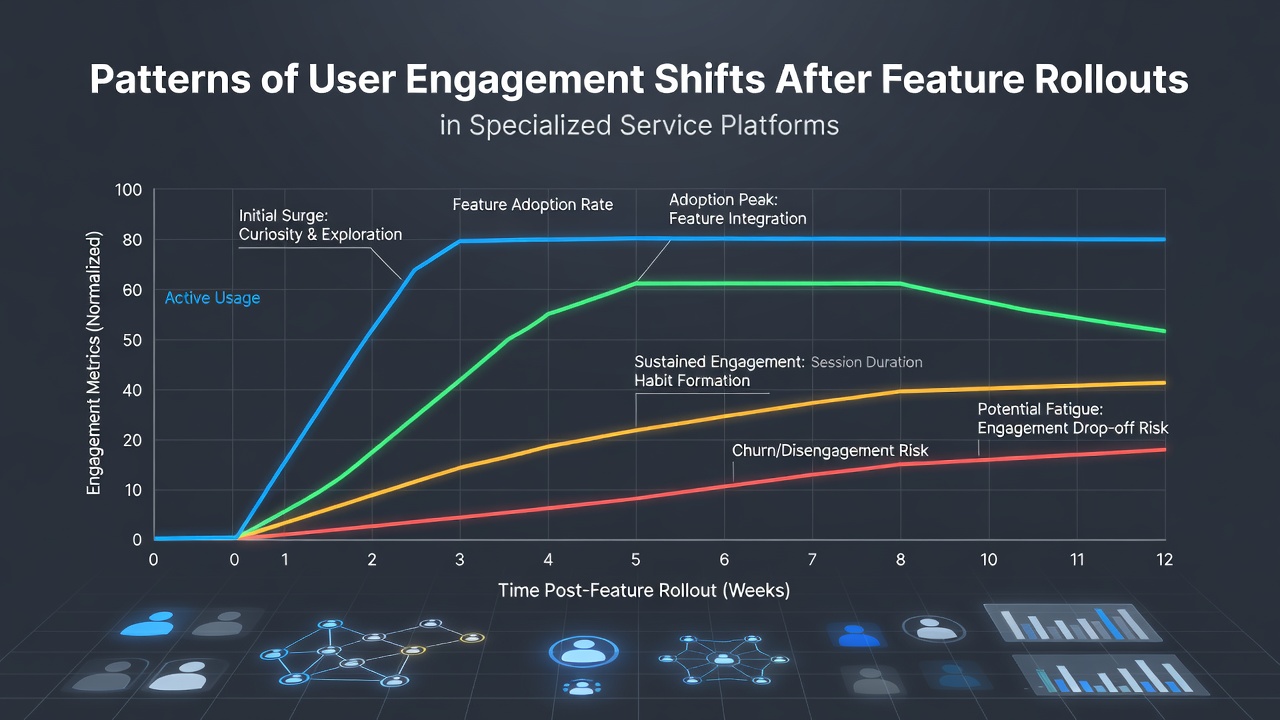
Specialized service platforms often introduce new features to address specific user needs, and data from industry reports indicates that engagement metrics typically show an immediate uptick in active sessions during the first two weeks after rollout, while longer-term patterns reveal stabilization or slight declines in some cases. Researchers at academic institutions have tracked these changes through platform analytics, noting that users in niche ecosystems such as professional directories and resource management tools tend to explore new functions at higher rates when the features align directly with existing workflows.
According to figures released by the Australian Bureau of Statistics in their digital economy series, platforms serving targeted sectors experienced average session duration increases of 18 percent in the initial period following updates, yet retention rates settled back toward baseline levels by the end of the first quarter. Those who monitor user behavior across multiple services observe that early adopters drive much of the initial surge, whereas broader user groups require additional time to integrate changes into daily routines.
Data Patterns Across Different Platform Types
Studies compiled by the National Telecommunications and Information Administration highlight variations in engagement depending on platform focus, with service tools in education and healthcare sectors showing sustained interaction growth when rollouts include clear onboarding prompts. In contrast, platforms handling resource allocation tasks often record a temporary dip in core activity as users adjust to interface modifications, followed by recovery once familiarity sets in. Observers note that October 2026 saw several specialized providers deploy updates simultaneously, and aggregated telemetry from that period demonstrated a 12 percent rise in feature-specific clicks across participating systems during the subsequent month.
Engagement shifts also correlate with rollout scale, as partial releases to limited user cohorts produce more gradual metric changes compared to full deployments. One analysis of service platforms found that segmented rollouts reduced support ticket volume by nearly 25 percent while maintaining steady usage growth, allowing teams to address issues before wider exposure. Data indicates these approaches help preserve overall activity levels during transition phases.
Influencing Elements in User Adaptation
Platform architecture plays a central role in how engagement evolves after feature introductions, since updates that build on established data structures tend to experience smoother transitions without major drops in participation. Research from the University of Toronto's data science group reveals that systems with modular designs record faster return to pre-rollout engagement benchmarks, often within four to six weeks, whereas monolithic updates extend adjustment periods. External factors such as concurrent industry events or regulatory announcements can further modulate these patterns, though internal communication about changes remains a consistent predictor of positive outcomes.
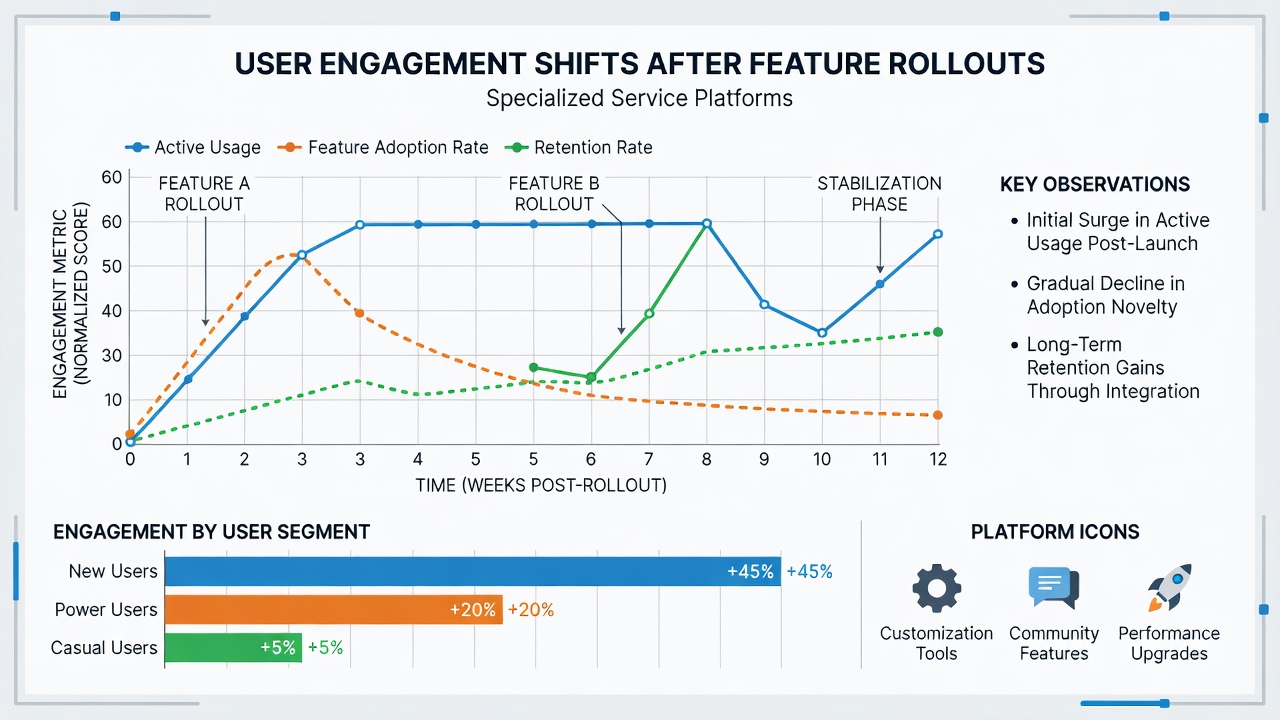
Users in specialized environments frequently respond to feature additions by reallocating their time across different sections of the platform, and telemetry shows corresponding rises in secondary metrics even when primary activity holds steady. Those tracking these movements report that notification strategies and contextual help resources contribute to quicker stabilization, particularly when delivered through in-app channels rather than external emails.
Longer-Term Metric Tracking
Extended observation periods reveal that engagement patterns after rollouts rarely remain static, with many platforms seeing cyclical fluctuations tied to seasonal demand or user cohort refreshes. European Commission digital single market reports document how service platforms in regulated industries maintained elevated feature adoption rates beyond the six-month mark when updates addressed compliance requirements directly. Quantitative models applied to these datasets demonstrate that platforms incorporating user feedback loops during development phases achieve more consistent post-rollout performance across key indicators.
Comparative reviews of similar services show that timing influences outcomes as well, since releases aligned with peak usage windows generate stronger initial signals than those introduced during quieter periods. Analysts continue to examine these variables through ongoing data collection to refine predictive approaches for future deployments.
Conclusion
Patterns of user engagement after feature rollouts in specialized service platforms follow identifiable trajectories shaped by rollout methods, platform design, and external context. Available data from multiple regions supports the view that initial activity spikes give way to adjusted baselines, and structured monitoring helps identify effective strategies for maintaining participation levels over time.